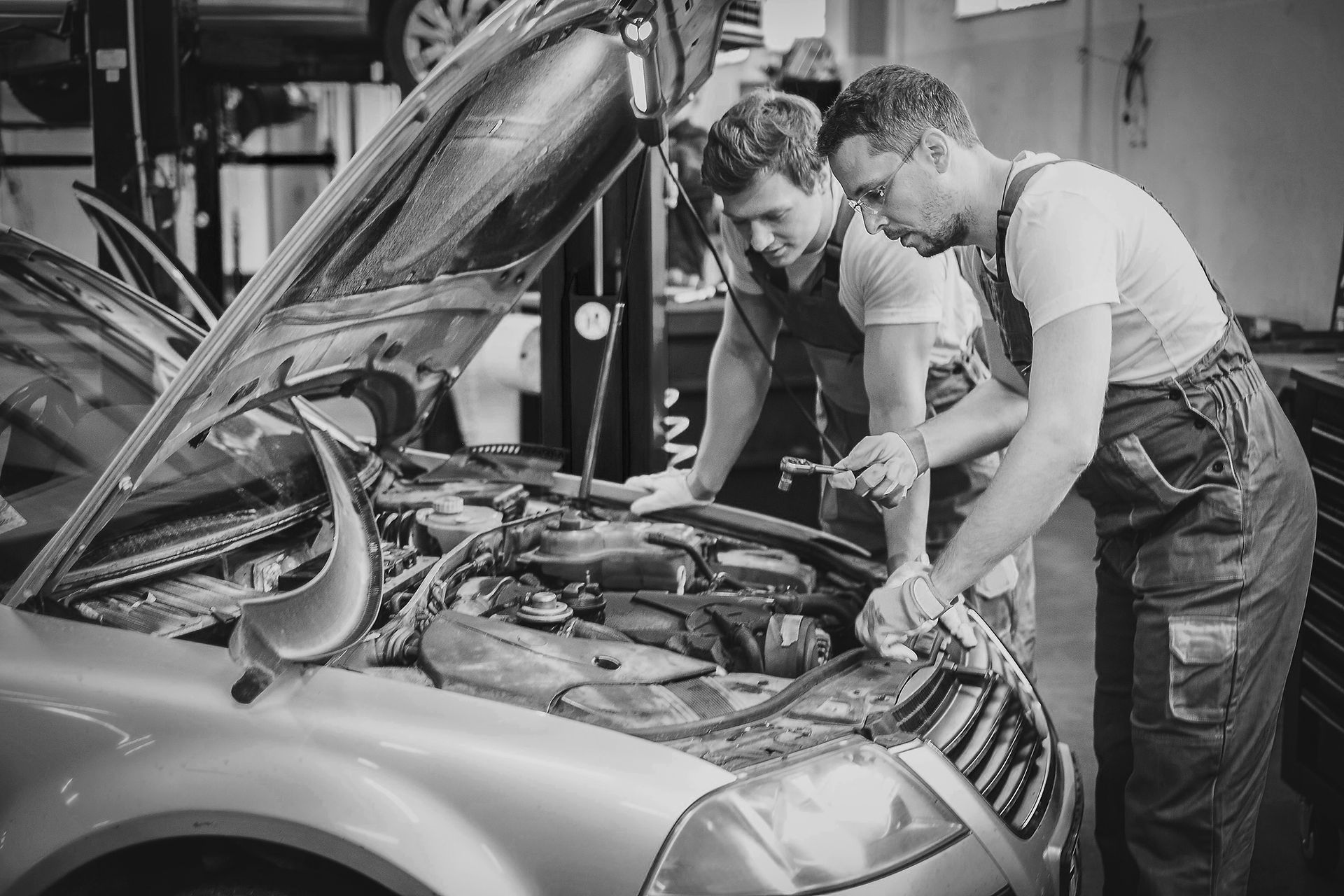

Car Won't Start? Here's What to Check

You turn the key (or press the button), and… nothing.
Or maybe a click. Or a sluggish crank that doesn't quite get there. When your car won't start, it's easy to jump straight to worst-case scenarios — but most of the time, the cause is something straightforward.
Here's a rundown of the most common reasons, how to narrow it down, and what to do next.

🔋 The Usual Suspect — A Flat or Dying Battery
If we had a dollar for every "car won't start" call that turned out to be the battery, we'd have… a lot of dollars.
A dead or weak battery is far and away the most common culprit. Here's what to look for:
Clicking noise when you turn the key — the starter motor is trying, but there's not enough juice to turn the engine over.
Lights and dash come on, but the engine won't crank — there's some charge left, but not enough for starting.
Absolutely nothing happens — no lights, no dash, no sound. The battery is completely flat.
Car batteries typically last three to five years, but extreme heat (hello, Australian summers) can shorten that considerably. If yours is getting up there in age, it might not be dead — just on its last legs.
A jump start will usually get you going, but if the battery keeps dying, it's time for a replacement.

⚡ Beyond the Battery — Other Common Culprits
Battery checks out fine? Here's what else could be going on.
Starter Motor
You hear a single loud click (or a grinding noise) when you turn the key, but the engine doesn't crank. The starter motor is the component that physically turns the engine over — when it fails, nothing moves. This is a common one in older vehicles and usually needs a workshop to sort out.
Alternator
Your alternator charges the battery while the engine runs. If it's failing, your battery will keep going flat even after you charge or replace it. Warning signs include dimming headlights while driving and the battery warning light on the dash.
Fuel System
If the engine cranks normally but won't actually fire, fuel delivery might be the issue. A failed fuel pump, clogged fuel filter, or empty tank (no judgement) can all stop combustion from happening. You might notice the engine turning over faster than usual — it's spinning freely because there's no fuel resistance.
Ignition System
Faulty spark plugs, a worn ignition coil, or a failing ignition switch can all prevent starting. If the engine cranks but won't catch, and you know there's fuel, the ignition system is worth investigating.
If you're not sure what's causing the problem, a proper auto-electrical diagnosis will pinpoint it quickly.

🚨 What to Do When Your Car Won't Start
Before you call anyone, try these quick checks.
Check the obvious stuff first. Is it in Park (auto) or Neutral (manual)? Is your foot on the brake or clutch? Some cars won't start without these — it catches more people out than you'd think.
Try a jump start. If you've got jumper leads and a mate with a running car (or a portable jump starter), this will tell you quickly whether the battery is the issue. Connect positive to positive, negative to a metal ground point on the dead car — not the negative terminal of the dead battery.
Listen to the sounds. What your car does (or doesn't do) when you turn the key tells you a lot:
Rapid clicking = likely flat battery
Single click = likely starter motor
Cranks but won't fire = likely fuel or ignition
Nothing at all = likely dead battery or electrical fault
Don't keep cranking. If it's not starting after a few attempts, continuing to try will just drain the battery further and can overheat the starter motor.
If a jump start doesn't work — or you don't have the gear — roadside assistance is your best bet. No point diagnosing it in a car park when a mechanic can do it properly.

💡 How to Prevent Starting Problems
Most no-start situations are avoidable with basic maintenance.
Get your battery tested regularly. Most mechanics will test it during a routine service. If it's more than three years old, keep an eye on it — especially heading into summer.
Stick to your service schedule. A regular logbook service covers spark plugs, filters, fluids, and belt inspections — all things that can cause starting issues if they're neglected.
Don't ignore warning signs. Slow cranking, dimming lights, or a battery warning light on the dash are all your car telling you something's not right. Catching it early is cheaper than a tow and an emergency repair.
Drive it regularly. Cars that sit for weeks at a time are more prone to flat batteries. If you've got a vehicle that doesn't get used often, a battery maintainer (trickle charger) is a worthwhile investment.

📍 Stuck in North-East Victoria or Southern NSW?
If your car won't start and you're in or around Benalla, Yarrawonga, Mulwala, or the wider North-East Victoria and Southern NSW region, Ynot Auto offers 24/7 roadside assistance — including jump starts, battery replacements on the spot, and towing if needed.
We're RACV and NRMA accredited, so if you're a member, we may already be your nearest callout option.

❓ Frequently Asked Questions
Q: Why does my car click but not start?
A: A rapid clicking noise usually means a flat or weak battery — there's enough power to activate the starter solenoid but not enough to turn the engine. A single loud click often points to a faulty starter motor. Either way, try a jump start first.
Q: Can a car battery die overnight?
A: Yes. A failing battery, a parasitic drain (something drawing power while the car is off), or leaving lights on can all flatten a battery overnight. If it happens more than once, get the battery and charging system tested.
Q: How much does it cost to replace a car battery?
A: Most passenger car batteries cost between $150 and $300 fitted, depending on the vehicle. Some European cars and SUVs with larger batteries can be more. It's one of the cheaper repairs that makes a big difference to reliability.
Q: My car won't start after sitting for a week — is that normal?
A: It's common but not normal. A healthy battery should hold charge for several weeks. If yours is dying after a few days, the battery is either old or there's a parasitic drain that needs diagnosing.
Q: Should I call roadside assistance or a tow truck?
A: If you think it's a flat battery or something minor, roadside assistance can often fix it on the spot. If the car still won't start after a jump, or you suspect something more serious, a tow to a workshop is the safer option.


Comments