
When to Replace Your Brake Pads: Signs & Timing

Your brake pads are designed to wear out. Every time you press the pedal, a small amount of friction material gets sacrificed to slow your car down. That's how they work — and eventually, there's not enough material left to do the job safely.
The trick is catching them before they're completely gone. Leave it too long and you're not just replacing pads — you're replacing rotors, and possibly more. Here's how to know when your brake pads need attention and what to expect when they do.

🔍 How Long Do Brake Pads Last?
There's no single answer — it depends heavily on how and where you drive.
As a rough guide, most brake pads last somewhere between 30,000 and 70,000 kilometres. That's a wide range because driving style and conditions make an enormous difference.
What Wears Pads Faster
City driving: stop-start traffic, traffic lights every few hundred metres, constant braking. Urban drivers can chew through pads twice as fast as highway cruisers.
Hilly terrain: if you're regularly driving through places like the Alpine region or even just hilly suburbs, you're using your brakes far more than someone on flat roads.
Heavy vehicles: towing a caravan, loaded ute, or just a car that's always full of passengers and gear means more weight to stop — and more pad wear.
Driving style: late braking, hard stops, and riding the brakes all accelerate wear. Smooth, anticipatory driving makes pads last significantly longer.
Rear vs front: front brake pads typically wear faster than rears because weight shifts forward when you brake. Don't assume all four corners wear at the same rate.
Your mechanic should check pad thickness at every service. If you're between services, the signs below will tell you when something's up.

⚠️ Warning Signs Your Brake Pads Need Replacing
Your car gives you several warnings before brake pads fail completely. Learn to recognise them.
Squealing or Squeaking
A high-pitched squeal when you brake is often the first sign. Most brake pads have a small metal wear indicator built in — when the pad wears down far enough, this indicator contacts the rotor and creates that distinctive noise. It's annoying by design. That's your cue to book an inspection.
Not all squealing means worn pads — dust, moisture, or cheap pad materials can cause noise too. But consistent squealing that happens every time you brake is worth investigating.
Grinding
If squealing turns to grinding — a harsh, metal-on-metal sound — you've gone past the wear indicator. The backing plate of the pad is now contacting the rotor directly. This damages the rotor surface and means you're likely up for rotor replacement as well as pads. Don't keep driving on grinding brakes.
Longer Stopping Distances
If you're noticing that your car takes longer to stop than it used to, or you need to press the pedal harder, worn pads are a likely cause. This one's easy to miss because it happens gradually — but if something feels different, trust your instincts.
Vibration or Pulsing
A vibration through the brake pedal when stopping can indicate uneven rotor wear, often caused by pads that have worn unevenly or been allowed to wear too far. It can also mean warped rotors from overheating. Either way, it needs checking.
Visual Check
On many cars, you can see the brake pads through the wheel spokes. The pad material should be at least 3mm thick. If it's thinner than that — or you can't see much material left — it's time.

💰 What Happens If You Wait Too Long?
Delaying brake pad replacement doesn't save money. It costs more.
Rotor Damage
Once pads wear through to the backing plate, metal grinds directly on the rotor. Rotors are much more expensive than pads. A pad replacement might run $200–$350 per axle. Add rotor replacement and you're looking at $400–$700 or more per axle, depending on the vehicle.
Caliper Damage
In extreme cases, worn pads can cause the caliper piston to over-extend, damaging the caliper itself. Caliper replacement adds another $200–$500 per corner on top of everything else.
Safety
This is the obvious one. Brakes exist to stop your car. Worn pads mean longer stopping distances, reduced control, and in a genuine emergency, the difference between stopping in time and not. No repair bill is worth that risk.
Roadworthy Failure
If you're selling a car or transferring registration, worn brake pads will fail a roadworthy inspection. Better to sort it on your own timeline than under pressure before a sale.

⚙️ What's Involved in Replacing Brake Pads?
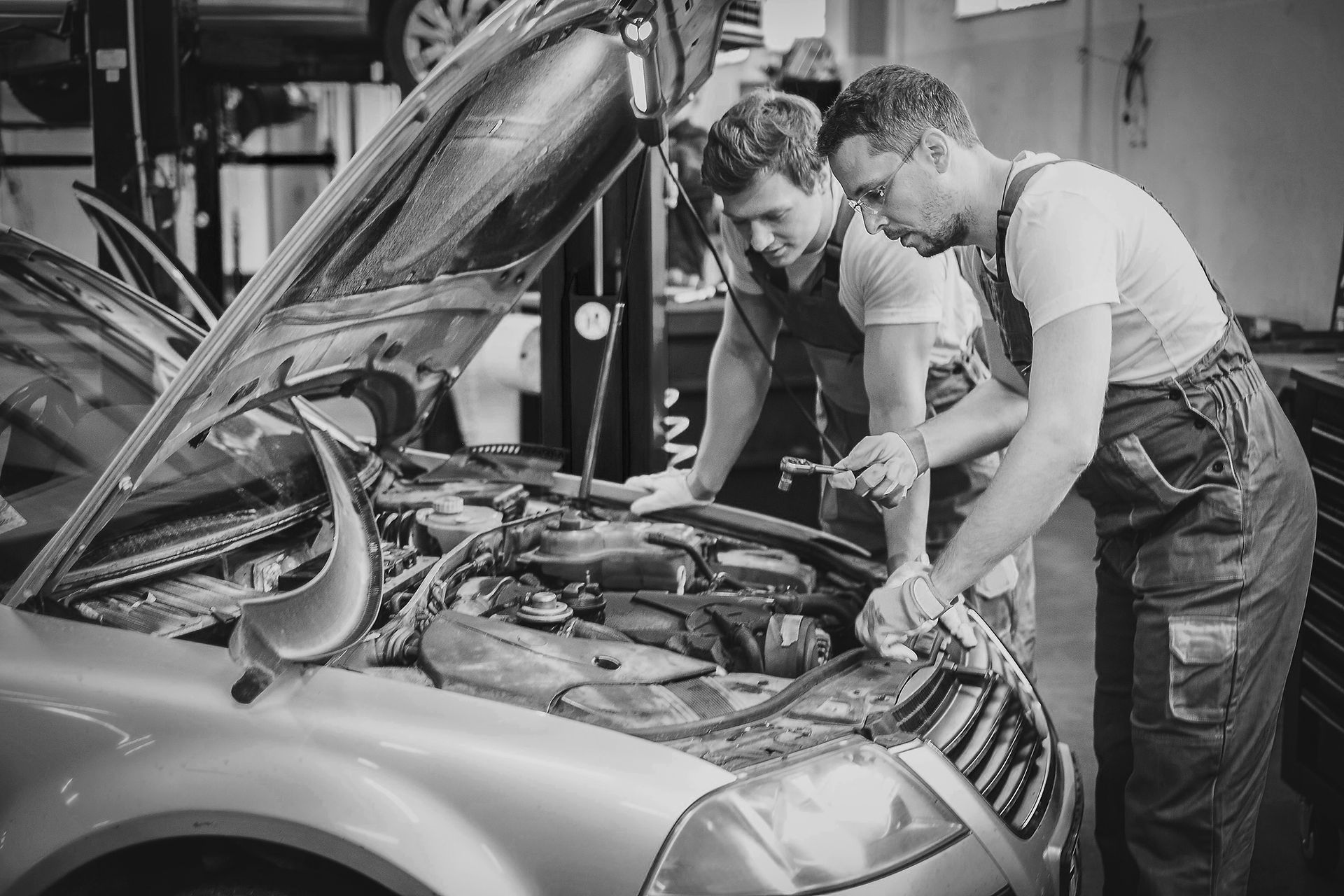
Brake pad replacement is a straightforward job for a mechanic, usually taking one to two hours for both axles.
The Process
The wheel comes off, the caliper is removed, old pads come out, new pads go in, and the caliper is refitted. The mechanic will also check rotor thickness and condition, inspect brake lines and hardware, and check brake fluid level and condition.
Pads Only vs Pads and Rotors
If your rotors are still within spec — adequate thickness, no deep scoring, no warping — you'll just need pads. If the rotors are worn, scored, or warped, they'll need machining (resurfacing) or replacement.
Machining removes a thin layer to restore a smooth surface. It's cheaper than replacement but can only be done if there's enough material left. Most rotors can be machined once, maybe twice, over their lifetime.
Bedding In
New pads need a brief bedding-in period — a series of gentle stops from moderate speed to let the pad material transfer evenly to the rotor surface. Your mechanic will usually do this before handing the car back, but it's worth avoiding hard braking for the first 100km or so.

📍 Brake Pad Replacement in North-East Victoria & Southern NSW
Ynot Auto offers brake servicing and replacement across Benalla, Yarrawonga, and Mulwala. We'll check pad thickness, rotor condition, brake fluid, and the full braking system — then give you a clear rundown of what needs doing now and what can wait.
If you're hearing squealing, noticing longer stops, or just haven't had your brakes checked in a while, book in and we'll take a look.

❓ Frequently Asked Questions
How much does it cost to replace brake pads?
For most passenger cars, expect $200–$350 per axle for pads only. If rotors need replacing too, that rises to $400–$700+ per axle. European and performance vehicles typically sit at the higher end due to parts costs.
Can I replace just the front or rear pads?
Yes. Front and rear pads wear at different rates, so it's common to replace one axle at a time. Your mechanic will check both and let you know what's actually needed.
How do I make my brake pads last longer?
Smooth, anticipatory driving is the biggest factor. Ease off the accelerator early, coast to slow down before braking, and avoid riding the brakes on descents — use a lower gear instead. Keeping your car lighter (less unnecessary cargo) helps too.
Should brake pads be replaced in pairs?
Yes — always replace both pads on the same axle together. Replacing just one side creates uneven braking, which affects handling and wears components unevenly.
Do brake pads get checked during a normal service?
They should. Brake inspection is a standard part of any logbook service. Your mechanic will measure pad thickness and let you know when replacement is approaching.


Comments