

What do your dashboard warning lights mean?

A light appears on your dashboard. Is it serious? Can you keep driving? Should you pull over immediately? Most drivers have been there — staring at an unfamiliar symbol, trying to figure out what their car is telling them.
Dashboard warning lights exist to alert you before small problems become expensive ones. Some are urgent. Some are just reminders. Knowing the difference can save you from unnecessary panic — or from turning a minor issue into a major repair bill.
Here's a plain-English guide to the most common dashboard warning lights and what to do when they appear.

🔍 Understanding DASHBOARD Warning Light Colours
Before diving into specific symbols, understand the colour coding. It's consistent across almost all vehicles.
Red lights indicate a serious problem or safety issue. These often mean stop driving as soon as it's safe and investigate immediately. Ignoring a red warning light can result in major damage or put you at risk.
Orange or amber lights indicate something needs attention soon, but isn't immediately critical. You can usually continue driving to your destination or to a workshop, but don't ignore it for weeks.
Green or blue lights are informational — they tell you something is active (high beams, indicators, cruise control) rather than warning you of a problem.
Flashing lights are more urgent than steady lights. A flashing check engine light, for example, is more serious than a steady one.

🚨 Red Warning Lights — Stop and Check
These lights demand immediate attention. If one of these comes on, pull over safely as soon as you can.
Temperature Warning (Thermometer in Water)
Your engine is overheating. Pull over immediately, turn off the engine, and let it cool down. Do not open the radiator cap while it's hot. Continuing to drive with an overheating engine can cause catastrophic damage — warped heads, blown gaskets, seized engines. Once it's cool, check your coolant level. If it keeps overheating, you need a tow to a workshop rather than risking further driving.
Oil Pressure Warning (Oil Can)
This means oil pressure has dropped to a dangerous level. Pull over and turn off the engine immediately. Low oil pressure means critical engine components aren't being lubricated — continuing to drive can destroy your engine within minutes. Check your oil level once stopped. If it's low, top it up before driving. If the light stays on with adequate oil, do not drive — call for roadside assistance.
Battery/Charging Warning (Battery Symbol)
Your charging system isn't working properly. The alternator may have failed, a belt may have broken, or there's an electrical fault. You can usually drive a short distance on battery power alone, but the battery will eventually go flat and the car will stop. Head directly to a workshop or home — don't make unnecessary detours. If you're far from help, call for assistance before the battery dies completely.
Brake System Warning (Exclamation Mark in Circle)
This could mean your handbrake is on (check that first), brake fluid is low, or there's a fault in the braking system. If the handbrake is fully released and the light stays on, get your brakes checked immediately. Driving with compromised brakes is not worth the risk.
Airbag Warning (Seated Figure with Circle)
The airbag system has detected a fault. The airbags may not deploy in a crash, or in rare cases, may deploy unexpectedly. Get it checked promptly — this is a safety system you don't want to gamble with.

⚠️ Orange Warning Lights — Book a Service Soon
These lights indicate problems that need attention but aren't immediately dangerous. You can usually finish your journey, but don't put off getting them checked.
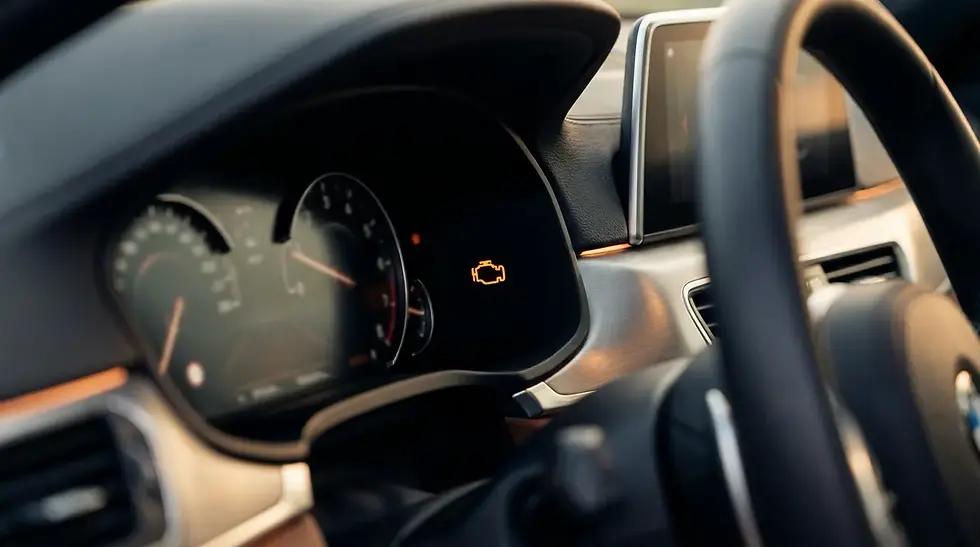
Check Engine Light (Engine Outline)
The most common — and most vague — warning light. It means the engine management system has detected a fault, but that fault could be anything from a loose fuel cap to a failing catalytic converter. A steady light means something needs investigating. A flashing light means a more serious misfire that could damage the catalytic converter — ease off the accelerator and get it checked sooner rather than later. Either way, an auto-electrical diagnosis will identify the specific fault code.
ABS Warning (ABS in Circle)
Your anti-lock braking system has a fault. Your normal brakes will still work, but the ABS won't activate in an emergency stop — meaning wheels could lock up on slippery surfaces. Safe to drive carefully, but get it checked soon.
Traction Control/Stability Warning (Car with Wavy Lines)
If this flashes while driving, it's doing its job — the system is actively preventing wheel slip. If it stays on constantly, there's a fault in the system. Similar to ABS, your car will still drive, but you've lost a safety feature. Worth investigating.
Tyre Pressure Warning (Exclamation Mark in Horseshoe Shape)
One or more tyres has low pressure. Check all four tyres (and the spare if monitored) and inflate to the correct pressure — you'll find the recommended PSI on the placard inside the driver's door frame. If a tyre keeps losing pressure, you likely have a slow puncture that needs repair or replacement.
Service Required/Spanner Symbol
Your car is due for a scheduled service based on time or kilometres. Not urgent, but don't ignore it indefinitely. Book a logbook service when you can.
💡 Other Common Dashboard Lights
Not every light is a warning. Some are just telling you what's active.
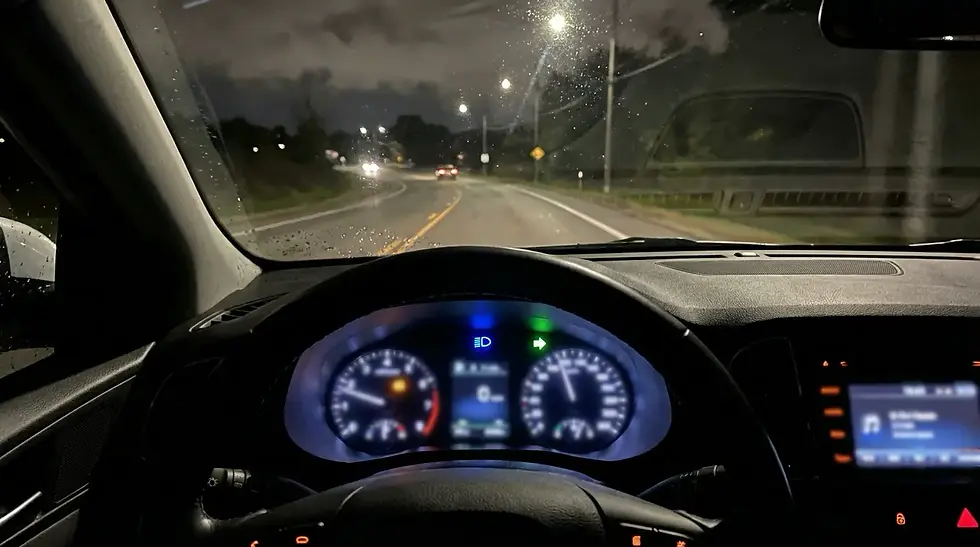
Headlight indicators show whether your headlights, high beams, or fog lights are on. Blue typically indicates high beams.
Indicator arrows flash to confirm your turn signals are operating.
Cruise control symbols confirm the system is active and show your set speed.
Door ajar warnings tell you a door, boot, or bonnet isn't fully closed.
Fuel level warning indicates you're running low on fuel — typically when around 50-80km of range remains, depending on the vehicle.
Seatbelt reminder chimes and displays until all occupied seats are buckled.
These don't require action beyond checking what's active or addressing the obvious (close the door, put on your seatbelt, get fuel).
🔧 What to Do When a Warning Light Appears
When a light comes on, stay calm and work through it logically.
Check the colour first. Red means assess immediately. Orange means assess soon.
Check if it's flashing. Flashing is more urgent than steady.
Consult your owner's manual. The manual has a complete list of symbols specific to your make and model, including some manufacturer-specific lights not covered here.
Don't ignore it. Warning lights rarely fix themselves. Even if the light goes off, the fault has been logged — get it checked to understand what triggered it.
Get a proper diagnosis. Guessing at the cause wastes time and money. A diagnostic scan reads the fault codes stored in your car's computer and tells you exactly what's wrong. Most workshops charge $50-$100 for a diagnostic scan, and it's money well spent compared to replacing parts that weren't the problem.

📍 Dashboard Warning Light Diagnosis in North-East Victoria and Southern NSW
If a warning light has appeared and you're not sure what it means, Ynot Auto can run a diagnostic scan and tell you exactly what's going on. We service Benalla, Yarrawonga, Mulwala, Wangaratta, Wodonga, and surrounding towns across the cross-border region — both Victorian and NSW sides.
We're RACV and NRMA accredited, so if a warning light has left you stranded, roadside assistance can get you to us or we can come to you.

❓ Frequently Asked Questions
Can I drive with the check engine light on?
If it's steady, you can usually drive short distances — but get it checked soon. If it's flashing, reduce speed and get it looked at as soon as possible. A flashing check engine light often indicates a misfire that can damage the catalytic converter.
Why did my warning light come on then go off?
The system detected a fault that's no longer present — possibly an intermittent issue. The fault code is usually still stored in the car's computer, so a diagnostic scan can reveal what triggered it even after the light goes off.
How much does a diagnostic scan cost?
Typically $50-$100 at most workshops. It's worth it — the scan tells you exactly what fault codes have been logged, so you're not guessing or replacing parts unnecessarily.
What does it mean if multiple warning lights come on at once?
If several lights illuminate simultaneously (especially after a jump start or battery issue), it may indicate an electrical or charging system problem rather than multiple separate faults. Get the charging system and battery tested first.
Is it safe to drive with the ABS light on?
Your regular brakes will still work normally. However, the anti-lock function won't activate in emergency braking, which increases the risk of wheel lock-up on slippery surfaces. Safe for careful driving, but get it checked soon.


Comments